Chess
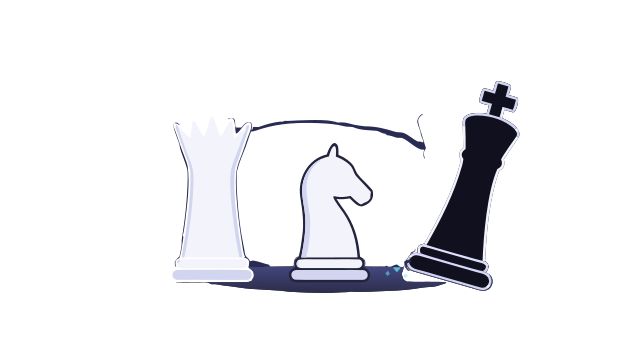
Sixty-four squares. Six rivals. One quiet night.
Complete chess with six calibrated opponents, selectable clocks, online duels, pass-and-play and a daily tactics ladder. Every rule is live, every game is reviewable, and the board was drawn for a phone first.
- Category
- Puzzle & Brain
- Modes
- Solo · Daily · 1v1
- Controls
- Mouse · Touch · Keyboard
Loading…
How to play
Drag a piece, or tap it and tap a lit square. Legal destinations light up the moment you touch a piece, and on a keyboard the arrows move focus while Enter selects. The chess home remembers your rival and clock, so one tap starts the game. After it ends, step through the review to see exactly where the evaluation turned.
What is Chess on Play?
This is complete chess, built for a phone screen first and a quiet night's focus. Six bots form a calibrated ladder from first-game friendly to genuinely hard: Ember, Breeze, Echo, Vector, Cipher and Nova, each one wrong in its own distinct, human way. Clocks are optional: play untimed while you learn, or add bullet, blitz or rapid time controls when you want the pressure. A friend can join by invite link for a live duel, or sit next to you for pass-and-play on one device.
Every rule of tournament chess is live: check and checkmate, stalemate, castling through safe squares, en passant, underpromotion, threefold repetition, the fifty-move rule and insufficient-material draws. The same pure rules engine that runs your game validates every submitted score.
Your rating and the review
Your local rating moves after every bot game, so there is always a next rival worth beating. When a game ends, open the review: an evaluation graph of the whole game, every move tagged from brilliant to blunder, and the board free to step through at your own pace. One honest look at a blunder teaches more than ten wins you never examine.
The daily tactics ladder
Once a day, five real positions arrive, the same five for everyone in the world. They escalate from a clean one-move tactic to a puzzle that will make you sit back. First-try solutions score full points, hints and retries cost, and a flawless run earns the clean bonus. One scored attempt per day: solve carefully, then compare your score on the daily leaderboard.
Tactical notes
- Develop with tempo. Bring knights and bishops toward the center while attacking something useful.
- Castle before opening the center. A king in the middle turns every forcing check into homework.
- Count forcing moves first. Checks, captures and direct threats prune the tree fastest. In puzzles, the answer is almost always forcing.
- Watch what the bot stopped defending. The lower levels genuinely overlook pieces, and punishing that is the fastest way to climb.
- Use the review. Every game you step through is a free lesson from your own mistakes.
FAQ
Are the bots fair?
Yes. Every level plays by searching the same position you see. Weaker levels are weaker because they look shallower and genuinely miss things, not because they get extra information or take moves back. The full-strength engine validates every game server-side.
Why did my drop snap to a different square?
On small screens the board magnetizes drops to the nearest legal destination within a short radius. When two legal squares are close enough to be ambiguous, the board asks you to confirm instead of guessing.
Can I take back a move?
Against a bot, yes, but the game is then marked unranked and will not submit a score. In duels and the daily ladder there are no takebacks.
When does the daily ladder reset?
At midnight UTC, for everyone at once. Your attempt is scored once per day; revisiting shows a review of your run.
More like this
Trilume
Puzzle & Brain
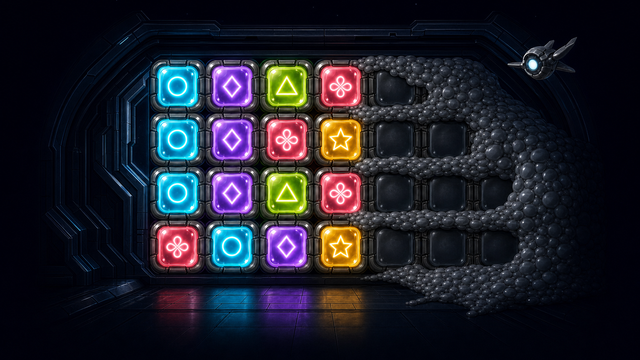
The repair swarm finishes every room it touches. Finished means gray. Three lights in a line burn it back.

Clavis
Puzzle & Brain
Painted rooms, real locks, one way out.
Blackstart Block Puzzle
Puzzle & Brain
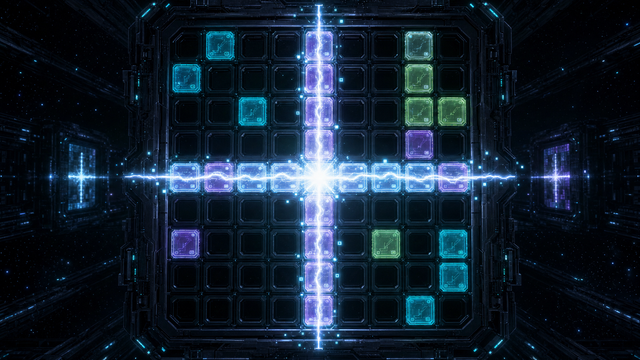
Seat three modules, close a circuit, relight the corridor.

Vector Zero
Puzzle & Brain
Read the ray before you tap it.