Table Tennis
Swing through the ball, play the spin, win to 11.
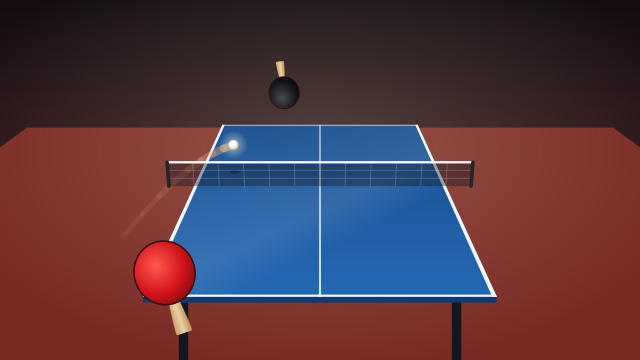
Table tennis against the computer, seen from behind your end of the table. Your bat follows your finger or the mouse, and the swing is the stroke: swing forward for pace and topspin, pull back to chop with backspin, swing across to angle the ball, hold still to block. The ball comes back with spin of its own, and a stroke that does not answer it goes into the net or long. Real rules: games to 11, won by two clear points, the serve changing every two points. Three opponents, from a slow one that misreads spin to one that hits the corners, best of three games (one game on easy), and a Daily match against the same computer for everyone.
- Category
- Arcade
- Modes
- Easy · Medium · Hard · Daily
- Controls
- Mouse · Touch · Keyboard
Loading…
How to play
You play from the near end with the red bat. Touch the table to start, then drag: the bat follows your finger (or the mouse) around your end of the room. To serve, swing up through the tossed ball; a gentle swing serves short, a brisk one long. The ball must bounce once on your side, then on the computer's. In a rally, let the ball bounce once on your side and put your bat in its path: the bat meets it on its own. Your swing at that moment decides the shot. Forward speed adds pace and topspin, a pull back chops it with backspin, a swing across angles it, and a still bat blocks it. Watch the trail: orange is topspin, answer it with a forward swing; blue is backspin, lift it with a swing up or push it back, or it drops into the net. A game goes to 11, won by two clear points; the serve changes every two points, and every point from 10 all. A serve that touches the net and lands right is a let and is played again. The match is the best of three games, one game on easy. On a keyboard, the arrow keys or WASD move the bat.
What is Table Tennis?
Table tennis is the indoor racket sport played on a blue or green table split by a low net: two players hit a light celluloid ball back and forth, and each shot must clear the net and bounce on the other side. Spin is what makes it deep. A ball struck with topspin dips and kicks on after the bounce, a ball cut with backspin floats and checks, and every return has to answer the spin it meets.
Here you play it against the computer, seen from behind your end of the table: your bat is the red one at the near end, the computer plays from the far end with a black one. Three opponents are on offer, from a slow one that misreads spin to one that moves fast and hits the corners, and every day brings a Daily match against the same computer for everyone.
How to play Table Tennis
Touch the table to start. You serve first.
- Your bat. Drag it with your finger, or move the mouse: it follows you around your end of the room, behind the table and over your half. The arrow keys or WASD move it too.
- The serve. Swing up through the tossed ball. A gentle swing serves short with backspin and a brisk one long with topspin. The ball must bounce once on your side, then on the computer's.
- Returning. Let the ball bounce once on your side and put your bat in its path. The bat meets the ball on its own; how you are swinging at that moment is the stroke.
- The stroke. A swing forward adds pace and topspin, a pull back chops with backspin, a swing across angles the ball, and a still bat blocks it back.
- Spin. The ball's trail shows its spin: orange is topspin, blue is backspin. Answer topspin with a forward swing, or a still block sends it long. Lift backspin with a swing up, or push it back with a chop, or it drops into the net.
- Scoring. A game goes to 11 and must be won by two clear points. The serve changes every two points, and every point from 10 all. A serve that touches the net and then lands right is a let and is played again.
- The match. Best of three games, or a single game on easy.
- On a phone held sideways the camera stands lower so the whole table fits, and the score and the levels move to the side.
Tips and strategy
- Wait for the bounce. The bat only meets the ball after it has bounced on your side. Move to where it will be at the top of its bounce, not where it is now.
- Read the trail before you swing. An orange ball wants a forward swing, a blue one wants a lift or a push. A pale ball is flat: a little pace is all it needs.
- Do not swing as hard as you can. Pace makes the ball land deeper, and a full swing on top of a fast ball can carry it past the end line.
- Move the computer around. A swing across sends the ball wide. The easy computer is slow to get there, and even the hard one has to cover the whole width of the table.
- Serve short with backspin. A gentle serve is short and cut, so the computer has to lift it, and the weaker computers misread backspin and put some of it into the net.
Frequently asked questions
Is Table Tennis free?
Yes. Like every game on Play, it runs free in your browser, with no download and no account.
Why did my return go into the net?
Most likely the ball came with backspin (a blue trail) and your bat was still or moving too slowly. Backspin needs an answer: swing up through it, or pull back to chop it.
Why did my return go long?
Either you met topspin with a still bat or a pull back, or you swung so hard that the pace carried the ball past the end line. A firm forward swing is safer than a full one.
How is my score worked out?
10 points for every point you win (at most 13 of them count in each game), 100 for every game you win, and 300 for winning the match. A 2 to 1 win with long games is worth up to 890; on easy, a single game is worth up to 530.
What is the Daily match?
Every day everyone plays the same medium computer, started from the same seed, so the scores compare on the leaderboard.
Can I play with a mouse or a keyboard?
Yes. With a mouse, click the table once and the bat follows the pointer. On a keyboard, the arrow keys or WASD move the bat, and moving it forward into the ball is a swing.
More like this
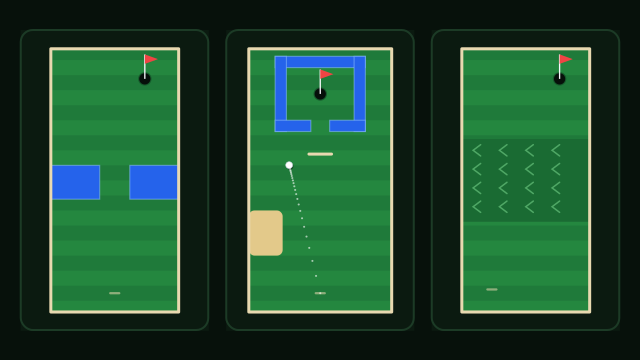
Minigolf
Arcade
Nine holes of putting, with walls, sand, water and slopes.
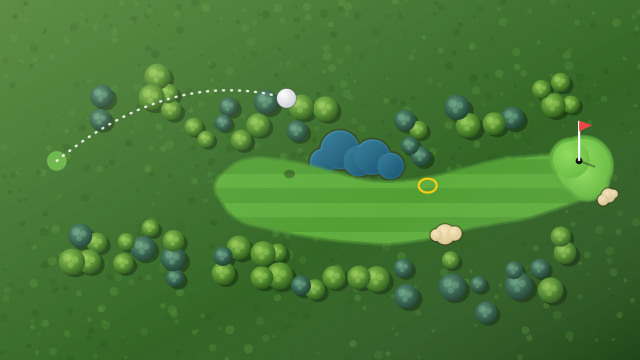
Golf
Arcade
Nine full holes from above: pick a club, read the wind and time the two-tap swing.
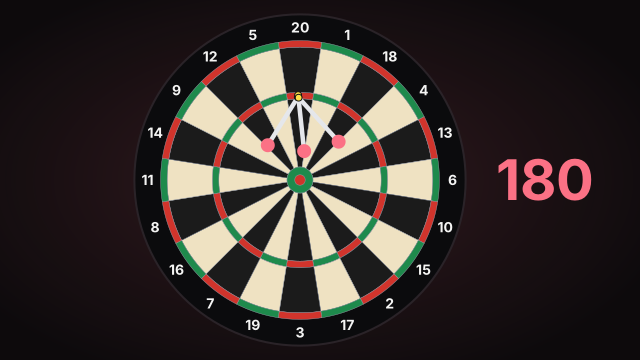
Darts
Arcade
Aim, steady your hand and throw: 501 down to zero, out on a double.
Archery
Arcade
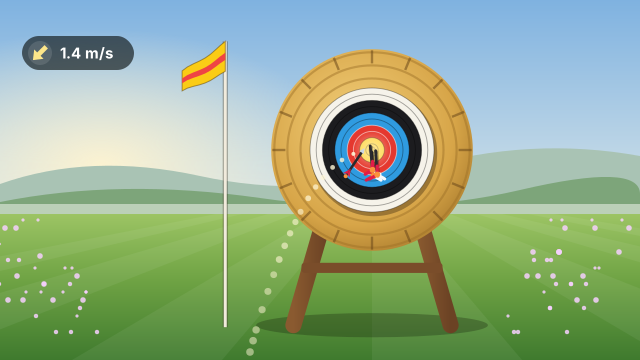
Read the wind, draw, let go: twelve arrows at the gold.