Curling
Send the stone down the ice, let it curl, and stop it nearest the button.
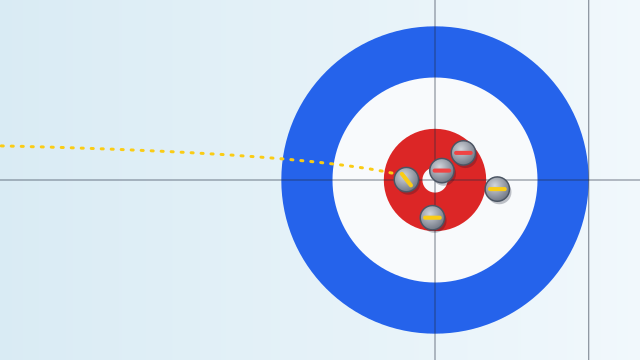
Curling against the computer over four ends, four stones a side each end. You choose the line with the broom, the turn and the weight, and the stone slides down the ice, curling the way it turns. At the end of each end, the side with the stone nearest the button scores a point for every stone nearer than the other side’s best. Three levels, and every day a Daily match, the same for everyone.
- Category
- Arcade
- Modes
- Easy · Medium · Hard · Daily
- Controls
- Mouse · Touch · Keyboard
Loading…
How to play
On your turn, touch the ice to hold the broom where you want to send the stone: it leaves toward the broom and then curls. Pick the turn, left or right: the side the stone curls to, most of all near the end as it slows. On the slider at the right, pick the weight: Guard stops in front of the house, Draw in the middle, Back at the back of the house, and Takeout hits hard to knock a stone out. On Easy and Medium a pale stone shows where the throw would stop on empty ice. Then press Throw. Each end has four stones a side, thrown in turn, and the side with the last stone (marked on the board) has the edge; the side that scores throws first in the next end. After four ends the most points wins; level, an extra end decides it. On a keyboard: the left and right arrows move the broom, up and down change the weight, T switches the turn, and Enter throws.
What is Curling?
Curling is the ice game of stones and brooms: you slide a heavy granite stone down a sheet of ice toward the house, a set of rings at the far end, and try to leave it nearer the centre than your opponent's. The stone curls the way it turns, so you aim beside where you want it and let the curl bring it in.
Here you play four ends against the computer, four stones a side each end. There are three levels of opponent, and every day brings a Daily match, the same for everyone.
How to play Curling
Every throw is three choices, then the stone does the rest.
- The broom. Touch the ice to hold the broom: the stone is sent along that line and curls away from it.
- The turn. Left or right: the side the stone curls toward, mostly at the end of its slide as it slows.
- The weight. On the slider: Guard stops in front of the house, Draw in the middle, Back at the back of the house, and Takeout hits hard enough to knock a stone out.
- The help. On Easy and Medium a pale stone shows where the throw would stop on empty ice.
- Scoring. When all eight stones have stopped, the side nearest the button scores a point for every stone nearer than the other side's best. The side that scores throws first in the next end, so the other side gets the last stone.
Tips and strategy
- Aim beside the target. A draw to the button needs the broom about a metre to the side, away from the curl.
- Use the last stone. With the hammer, keep the house open and score two; without it, put stones in front of the house to make the last throw harder.
- Guards protect. A stone left in front of the house hides the ones behind it from takeouts.
- Take out what counts. When the computer sits nearest the button, a takeout is often worth more than a draw.
- Watch the ghost. It ignores the other stones, so check whether a stone stands in the way of the line it shows.
Frequently asked questions
Is Curling free?
Yes. Like every game on Play, it runs free in your browser, with no download and no account.
Why does the stone curve?
Because it turns as it slides. The friction under a turning stone pulls it to one side, a little at first and more as it slows down.
What is the hammer?
The last stone of an end. It is a real advantage, so it goes to the side that did not score in the previous end; after a blank end it stays where it was.
What happens to a stone that stops short?
A stone that does not reach the far hog line, the red line before the house, is taken off when everything has stopped.
What is the Daily match?
Every day everyone plays the same computer opponent on the same terms, so the scores compare directly on the leaderboard.
More like this
Minigolf
Arcade
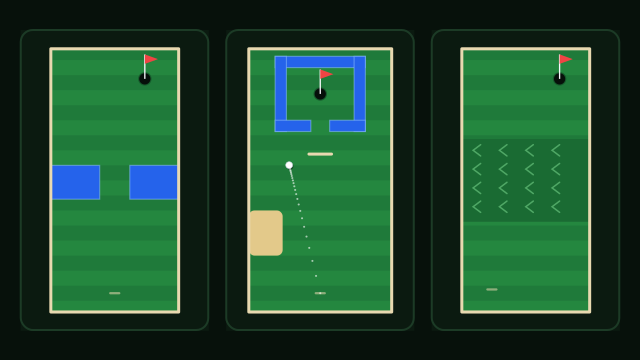
Nine holes of putting, with walls, sand, water and slopes.
Golf
Arcade
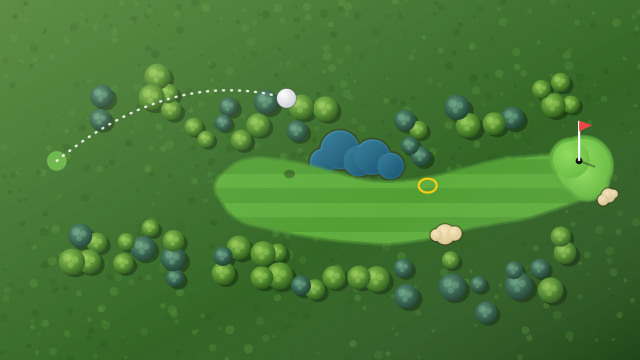
Nine full holes from above: pick a club, read the wind and time the two-tap swing.
Darts
Arcade
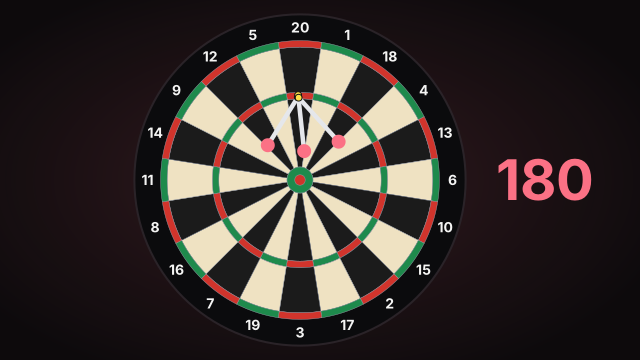
Aim, steady your hand and throw: 501 down to zero, out on a double.
Archery
Arcade
Read the wind, draw, let go: twelve arrows at the gold.