Cribbage
Fifteen two, fifteen four: peg your way to 121 first.
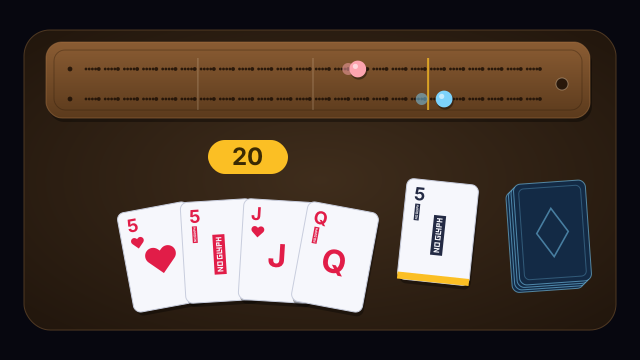
The classic card game of pegging and counting, six cards each, played against the computer. Throw two cards to the crib, cut the starter, then lay cards in turn toward 31 for fifteens, pairs, runs and the go, and count your hand in the show: fifteen two, fifteen four, and a pair is six. The first to peg 121 wins. Play an easy, medium or hard computer, and every day brings new deals, the same for everyone.
- Category
- Cards & Board
- Modes
- Easy · Medium · Hard · Daily
- Controls
- Mouse · Touch · Keyboard
Loading…
How to play
You and the computer get six cards each and throw two to the crib, a spare hand that belongs to the dealer. Then the starter is cut; a jack there gives the dealer 2 (his heels). In the play the non-dealer leads and you take turns laying cards, the count never passing 31: make 15 or 31 for 2, pair the card just laid for 2 (three of a kind 6, four 12), and finish a run of three or more for a point a card. If you cannot lay a card it is a go, and the other side plays on; whoever lays the last card pegs 1 and the count starts again. In the show each hand counts with the starter, the non-dealer's first, then the dealer's and the crib: 2 for every set of cards that makes 15, 2 for every pair, a point a card for every run, 4 for four cards of one suit in the hand (5 with the starter; the crib needs all five), and 1 for the jack of the starter's suit (his nobs). The deal alternates, and the first to 121 wins on the spot, even in the middle of the play. Your score: your points, the points the computer is short of 121, and 100 for the win.
What is Cribbage?
Cribbage is a card game for two that has been played in pubs, kitchens and ship's messes for almost four hundred years; its invention is usually credited to the English poet Sir John Suckling in the early 1600s. Its trademark is the board: a strip of wood with two lanes of holes, where each player moves two pegs forward, leapfrogging, every time they score. Here you play the six-card game for two against the computer, by the standard rules.
Each hand has three parts. You throw two cards to the crib, the dealer's spare hand. In the play you lay cards in turn toward a count of 31, scoring for fifteens, pairs and runs as they appear. In the show every hand is counted with the starter: fifteen two, fifteen four, and a pair is six. The first to peg 121 wins. The computer comes in three strengths, and every day brings new deals, the same for everyone.
How to play
The lower card of the opening cut deals first; after that the deal alternates.
- The deal and the crib. Each player gets six cards and throws two face down to the crib, which belongs to the dealer and is counted as a third hand at the end. Tap two cards, then throw.
- The starter. A card is cut from the pack and turned up. It plays no part in the play but counts in every hand. If it is a jack, the dealer pegs 2 at once: two for his heels.
- The play. The non-dealer leads, and you take turns laying one card each, the count of the cards never passing 31. Aces count 1, pictures 10, the rest their number. Making 15 or 31 scores 2. A card of the same rank as the one just laid is a pair for 2; three in a row is a pair royal for 6, four a double pair royal for 12. A card that completes a run of three or more among the last cards laid, in any order, scores a point a card.
- Go and the last card. If you cannot lay a card without passing 31, it is a go and the other side plays on as long as it can. Whoever lays the last card pegs 1 (2 for exactly 31, nothing more), the count starts again from nothing and the other side leads. The last card of the whole play pegs 1 too. You may never hold back a card that fits.
- The show. The non-dealer's hand counts first, then the dealer's, then the crib, each with the starter: 2 for every set of cards that adds up to 15, 2 for every pair, a point a card for every run (a double run counts twice), 4 for four cards of one suit in the hand (5 if the starter matches; the crib only scores all five), and 1 for the jack of the starter's suit, his nobs.
- Winning. The first to reach 121 wins at once, in the play or in the show, so the order of the show matters near the end. The board marks the skunk line at 91: a loser short of it is skunked, which here earns no extra stake but shows in your score. The game counts every hand in full, so there is no muggins.
- Score. Your points, the points the computer is short of 121, and 100 for the win: the bigger the margin, the better the score.
Strategy tips
- Mind whose crib it is. Fives, pairs and two cards that make fifteen are gifts to a crib: throw them into yours, never into the computer's. A king with a ten or a nine is the pair of cards it can do least with.
- Keep the hand, not the cards. Keep the four cards that score best over every possible starter: fives and ten-cards, pairs, and cards that touch, so the cut can complete a run or another fifteen.
- Lead low. A four or less cannot be made into fifteen by a single card. Leading from a pair is good too: if the computer pairs you, your third card makes a pair royal for 6.
- Keep the count off 5 and 21. From there any ten-card scores 2 for the other side. Avoid laying a card next in rank to the last one played, which invites a run.
- Count to the end. Near 121, remember that the non-dealer counts first: as dealer you may need to peg out in the play, and as non-dealer you may only need to hold your lead.
FAQ
Is Cribbage free to play?
Yes. Like every game on Play, it runs free in your browser, with no download and no account needed.
Can the computer see my cards?
No. It plays only on what it can see from its seat: its own six cards, the starter and the cards already laid, plus what your goes have told it. It never looks at your hand, your throw or the pack.
Why can I not say go when I still have a card that fits?
The rules ask you to play whenever you can. The game says go for you the moment no card fits, so you never have to think about it.
What is a skunk?
A player who loses with fewer than 91 points is skunked, and with fewer than 61 double skunked. The line is marked on the board and the end of the game tells you when it happens. There is no double stake here, but the margin of a skunk raises your score.
Is there muggins?
No. Every hand and every crib is counted in full for both players, call by call, so no point is ever missed.
What is the daily deal?
Every day everyone gets the same deals against the same computer, so scores compare directly on the leaderboard.
More like this
Gin Rummy
Cards & Board
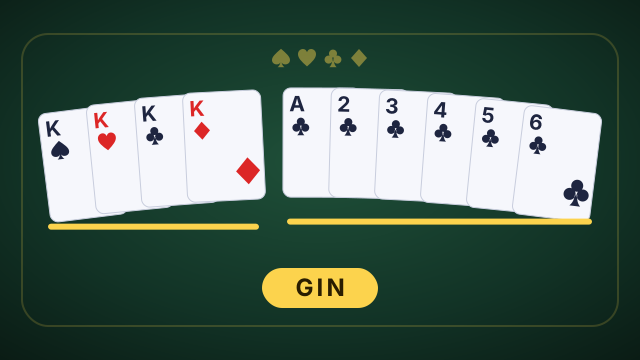
Build sets and runs, knock early or wait for gin, and reach 100 first.
Tile Rummy
Cards & Board
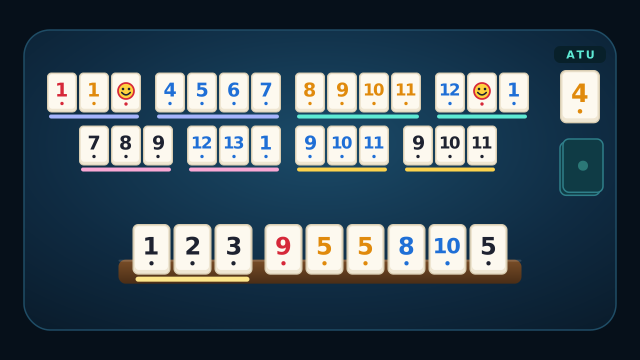
Romanian rummy on a rack: lay down 45, add to every meld on the table, go out first.
Chinchón
Cards & Board
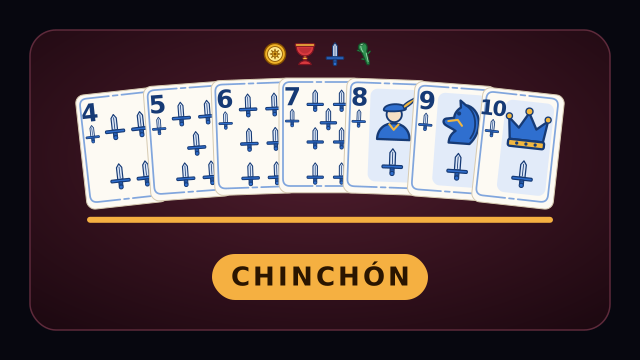
Meld your seven Spanish cards, close with 5 or less, and send the computer over 100.
Canasta
Cards & Board
Meld in sevens, fight for the discard pile and reach 3000 first.