Warehouse
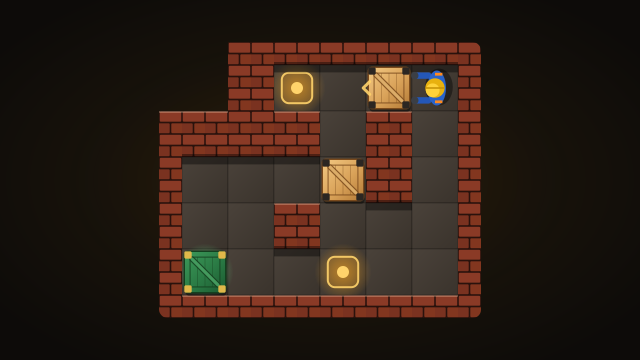
Push every crate onto its glowing spot, one step at a time.
The box-pushing puzzle: a worker in a brick-walled warehouse pushes wooden crates onto the marked spots on the floor. Crates can be pushed but never pulled, and only one at a time, so a crate shoved into a corner stays there for good. 150 original levels in three lanes, from two crates to four, each with the fewest steps it can be solved in, plus a Daily level that is the same for everyone.
- Category
- Puzzle & Brain
- Modes
- Easy · Medium · Hard · Daily
- Controls
- Mouse · Touch · Keyboard
Loading…
How to play
Swipe to step the worker, and keep dragging to keep walking; tap a cell next to the worker to step there, or a free cell further off to walk there by the shortest way. Stepping into a crate pushes it one cell on, as long as the cell beyond is free. Get every crate onto a glowing spot. Undo and Restart are free. Your score is your time from the first step, plus 2 seconds for every step beyond the fewest the level needs and 30 seconds for every hint. Lower is better.
What is Warehouse?
Warehouse is a box-pushing puzzle, a genre that goes back to the home computers of the early 1980s. A worker stands in a walled warehouse with a few wooden crates and the same number of marked spots on the floor, and the job is to get every crate onto a spot. The worker can only push, never pull, and only one crate at a time, so every push has to be thought through: a crate shoved into a corner, or flat against a wall with no spot along it, can never be brought back.
Every level here is original. A generator builds a room, puts the crates on their spots and then plays backwards, pulling crates away the way a push would bring them back, and keeps the positions found deepest. A solver then works out the fewest steps each level needs, walking and pushing together, and that number is shown as the par. Easy levels have two crates and need 12 to 30 steps, medium levels three crates and 32 to 60 steps, and hard levels three or four crates and 62 steps or more. There are 50 levels in each, and a Daily level, the same for everyone, comes from a bank of 120 of its own.
How to play
Get every crate onto a glowing spot.
- Swipe to take a step. Keep dragging and the worker keeps walking, one step for every half cell your finger travels.
- Tap a cell next to the worker to step onto it. Tap a free cell further away and the worker walks there by the shortest way, around the crates, without pushing anything.
- Push a crate by stepping into it. It moves one cell on, as long as the cell beyond it is free floor. Two crates in a row will not move, and a crate can never be pulled.
- On a keyboard, the arrow keys (or W, A, S, D) take a step, and Z undoes.
- Undo and Restart are free. Undo takes back your last step, or your last walk as a whole; Restart puts everything back where the level began.
- Hint marks the next push of a shortest way from where you stand: a blue circle where the worker should stand, and an arrow on the crate to push. Each hint adds 30 seconds to your score. If there is no way left to finish, the hint tells you so.
- Score. Your time from the first step, plus 2 seconds for every step beyond the par and 30 seconds for every hint. Lower is better.
Strategy tips
- Corners are traps. A crate pushed into a corner without a spot can never leave it. When a crate gets stuck like that it is ringed in red, so undo straight away.
- Walls are one-way streets. A crate pushed flat against a wall can only slide along it. If there is no spot along that wall, it is lost too.
- Look at the spots first. Decide which crate goes to which spot, and which spot has to be filled last because filling it would block the way to the others.
- Leave room to get behind a crate. To push a crate left, the worker has to stand on its right. Before a push, check that you can still reach the side you will need next.
- Count your steps. The par is the fewest steps the level needs, walking included. A route that pushes the right crates in the right order usually needs very little extra walking.
FAQ
Is Warehouse free to play?
Yes. Like every game on Play, it runs free in your browser, with no download and no account needed.
Can every level be solved?
Yes. Every level was made by playing backwards from the solved warehouse, and a solver checked each one and counted the fewest steps it needs. A test in the game's code solves all of them again.
What counts as a step?
Every cell the worker moves, whether walking or pushing. A tap that walks the worker across the room counts every step of the walk, and that walk always takes the shortest way.
What does a red ring round a crate mean?
That crate can no longer reach any spot from where it stands, usually because it is in a corner or against a wall with no spot along it. Undo the push that put it there, or restart.
What is the Daily level?
Every day everyone gets the same level, from a bank of 120 with three crates each, so times compare directly on the daily leaderboard.
More like this
Linked Pairs
Puzzle & Brain
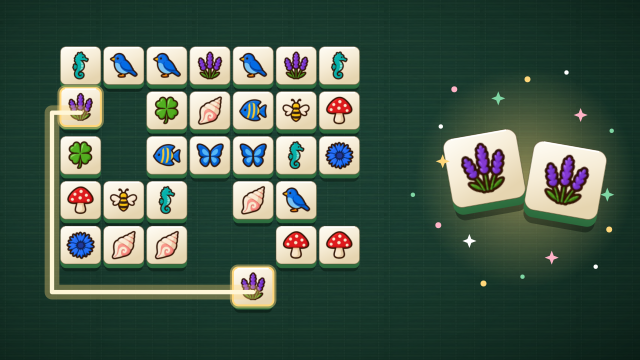
Link two alike tiles with a path of up to two turns, and clear the board.
Marble Gates
Puzzle & Brain
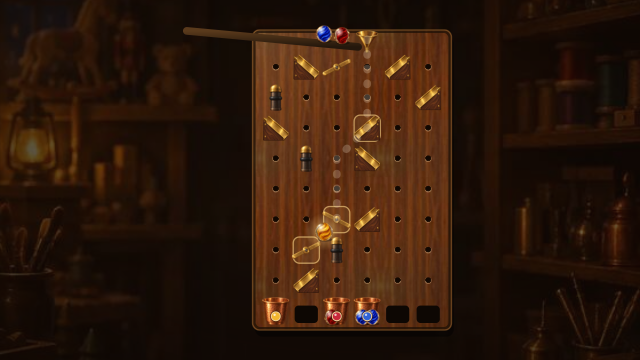
Set ramps and flip gates so every glass marble rolls into a cup of its own colour.

Maze Sprint
Puzzle & Brain
Read the grid. Break the clock.
Laser Mirrors
Puzzle & Brain
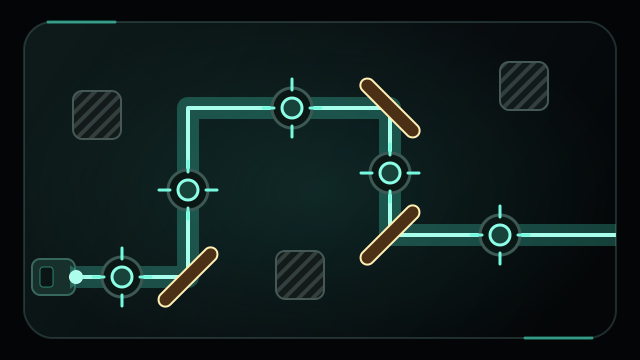
Bend the beam. Wake every node.