Klotski
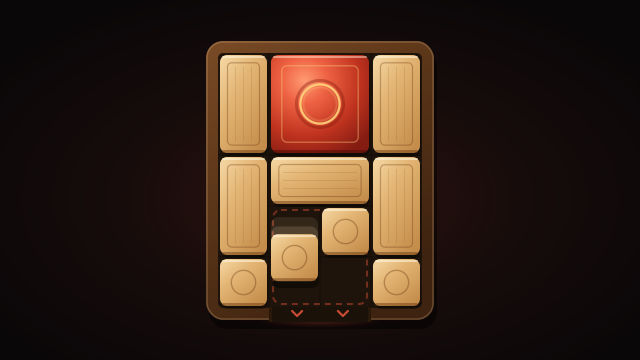
Slide the wooden blocks until the big red one slips out.
The wooden sliding-block puzzle known in China as Huarong Dao and in France as l'Âne rouge: a tray full of blocks with two cells left empty, and one big red block that has to get out through the gap in the bottom edge. Blocks slide but never lift, so every move makes room for the next. Three levels by how many moves a tray needs at the fewest, from 10 up past the famous 81 of the traditional layout, and a new tray every day, the same for everyone.
- Category
- Puzzle & Brain
- Modes
- Easy · Medium · Hard · Daily
- Controls
- Mouse · Touch · Keyboard
Loading…
How to play
Drag a block and it follows your finger through the empty cells, round corners too, then settles into a cell when you let go; a block with only one way to go moves when you tap it, and on a keyboard the arrow keys move the block in focus. Bring the big red block down to the gap in the middle of the bottom edge and it slides out. A move is one block moved, however far it goes, and moving the same block again straight after still counts as that one move. Undo takes back the last move and Reset puts every block back where it started; both are free. Your score is your time from the first move, plus 5 seconds for every move beyond the fewest the tray needs and 30 seconds for every hint. Lower is better.
What is Klotski?
Klotski is the wooden sliding-block puzzle that turns up in toy shops and grandparents' houses around the world, under a different name almost everywhere: Huarong Dao in China, Hakoiri Musume ("the daughter in the box") in Japan, l'Âne rouge ("the red donkey") in France. The name Klotski comes from the Polish word for wooden blocks. A tray four cells wide and five tall holds ten or so blocks of four shapes, with just two cells left empty, and the biggest block, a 2×2 square, has to get out through the gap in the middle of the bottom edge.
The rule that makes it hard is simple: blocks slide, they never lift. Every move has to make room for the next, and the big block usually travels a long, winding road while everything else shuffles round it. The traditional layout, with the big block at the top behind one wide block and four tall ones, takes at least 81 moves: Martin Gardner published an 81-move solution in Scientific American in 1964, and computer searches have since shown there is no shorter one.
Here every tray is dealt at random, and a solver works out the fewest moves it needs before you ever see it: easy trays need 10 to 20, medium trays 30 to 50, and hard trays 70 to 100, as hard as the traditional layout or harder. A new medium tray arrives every day, the same for everyone.
How to play
Bring the big red block out through the gap at the bottom, sliding the other blocks out of its way.
- Drag a block: it follows your finger through the empty cells, round a corner too, and settles into the nearer cell when you let go. It never passes through another block.
- Tap a block that has only one way to go and it moves one cell that way; tap again to keep it going.
- On a keyboard, move to a block with Tab, then the arrow keys move it a cell at a time.
- The way out is the gap in the middle of the bottom edge. Once the big block stands on the two middle cells of the bottom two rows, it slides out and the tray is solved.
- Counting moves. A move is one block moved, however far it goes and however many corners it turns. Moving the same block again straight after still counts as that one move, and putting it back where that move began takes the move back. This is the usual count, the one under which the traditional layout needs 81.
- Undo and Reset. Undo takes back your last move, Reset puts every block back where the tray started. Both are free; only the clock keeps running.
- Hint. Lights up the next move of a shortest way out from where your blocks stand, for 30 seconds on your score.
- Score. Your time from the first move, plus 5 seconds for every move beyond the fewest the tray needs and 30 seconds for every hint. Lower is better.
Strategy tips
- Work back from the gap. The big block needs the two middle columns clear below it. Look at what stands there and ask where each of those blocks could go.
- Keep the two empty cells together. Side by side they let a wide or a tall block move; split apart, they only move small blocks. Most good sequences keep them next to each other.
- Small blocks are your gears. The 1×1 blocks are the only ones that turn corners easily. Park them where they can slip into a gap, not wedged into a corner.
- Walk tall blocks past the big one. In the traditional layout the big block gets down by tall blocks climbing past it, one at a time, on either side. Look for the same rhythm in other trays.
- Watch the par. The fewest moves the tray needs is shown at the top. Far past it, a Reset costs nothing but time, and a fresh look often finds a shorter road.
FAQ
Is Klotski free to play?
Yes. Like every game on Play, it runs free in your browser, with no download and no account needed.
Can every tray be solved?
Yes. A solver checks every tray before it is dealt, and the par shown at the top is the fewest moves it needs. Every move can be undone by sliding the block back, so you can never get stuck for good.
What does the hint show?
The next move of a shortest way out from the position on your board, worked out on the spot. The block to move lights up and an outline shows where it goes; tap the lit block to make the move. Each hint adds 30 seconds to your score.
How are moves counted?
One move is one block moved to any cell it can slide to, however far and round however many corners. Moving the same block again right after is still one move. Under this count the traditional layout needs exactly 81 moves.
What is the daily tray?
Every day everyone gets the same medium tray, 30 to 50 moves at the fewest, so times compare directly on the daily leaderboard.
More like this
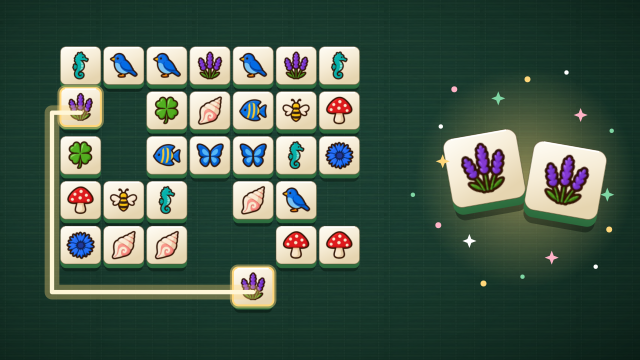
Linked Pairs
Puzzle & Brain
Link two alike tiles with a path of up to two turns, and clear the board.
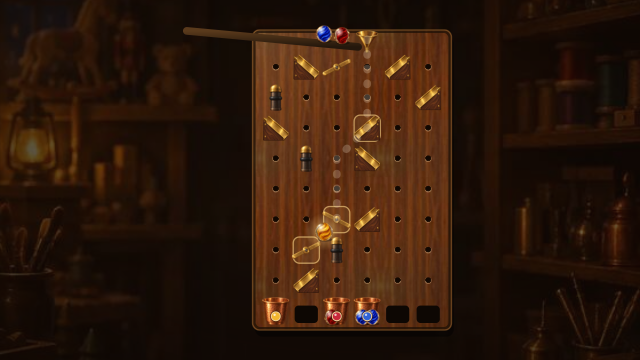
Marble Gates
Puzzle & Brain
Set ramps and flip gates so every glass marble rolls into a cup of its own colour.

Maze Sprint
Puzzle & Brain
Read the grid. Break the clock.
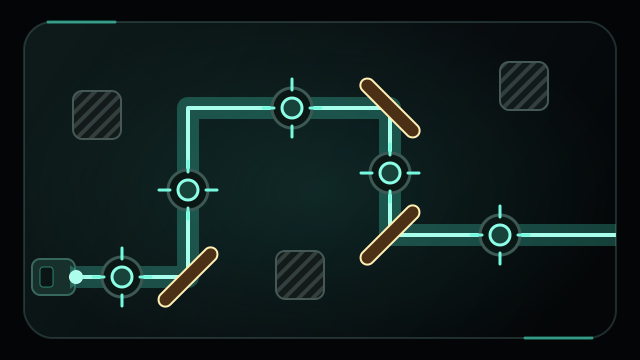
Laser Mirrors
Puzzle & Brain
Bend the beam. Wake every node.